Sep 22, 2026Industry News
How to Plan a Promotional Product Order for a Successful Trade Show

Trade shows give businesses an opportunity to meet potential customers, build brand awareness, and develop new partnerships. Promotional products are often used to attract visitors, support conversations, and help people remember a brand after the event.
However, ordering promotional products for a trade show requires careful planning. Choosing products, confirming quantities, preparing artwork, and arranging delivery all take time. A rushed order can result in unnecessary costs or products that do not meet the event's requirements.
This guide explains how to plan a more effective trade show promotional product order.
1. Define Your Marketing Objective
Before selecting promotional products, clarify what you want to achieve at the event.
Your objective may be to:
- Attract visitors to your booth
- Generate new business leads
- Promote a new product
- Strengthen existing customer relationships
- Increase brand awareness
- Encourage visitors to contact your sales team
Different objectives may require different products. A simple giveaway may work well for attracting large numbers of visitors, while a premium gift may be more appropriate for qualified customers or business meetings.
The product should support your marketing goal rather than simply increase the number of items at your booth.
2. Estimate the Required Quantity
Ordering too few products can create shortages during the event. Ordering too many may leave you with excess inventory and unnecessary costs.
To estimate the quantity, consider:
- Expected event attendance
- Number of exhibition days
- Booth location
- Target number of visitors
- Number of sales representatives
- Products reserved for key customers
- Potential future use
You do not necessarily need to prepare one premium gift for every visitor. A practical approach is to use different product levels for different audiences.
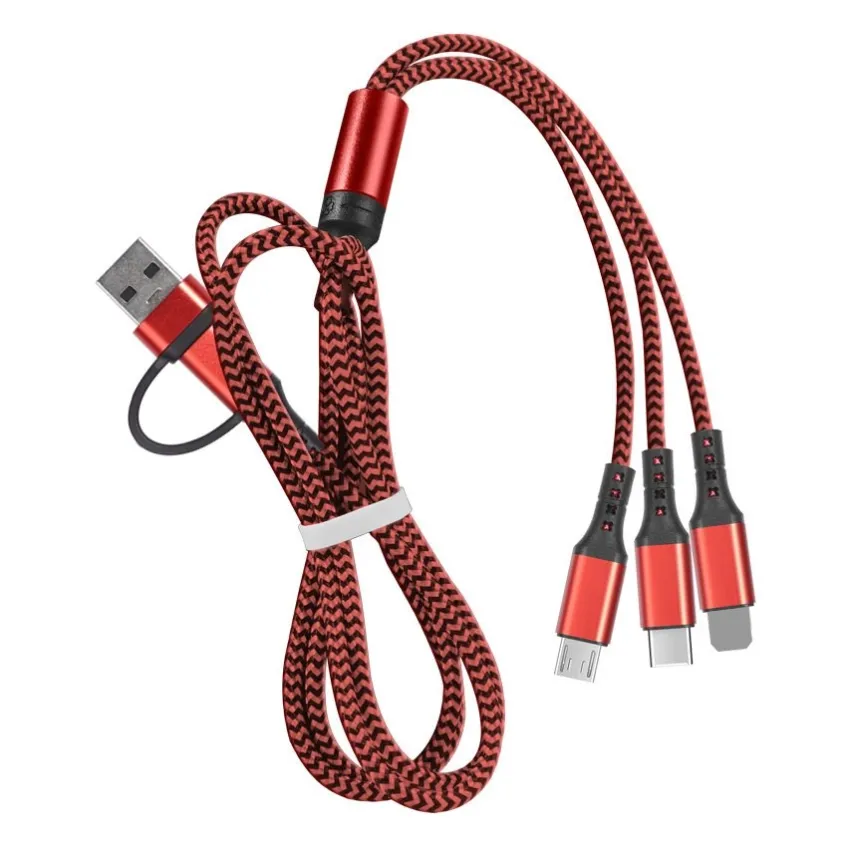
For example, simple branded cables or pens may be used as general giveaways, while customized gift sets can be reserved for important business meetings.
3. Choose Products That Are Easy to Carry
Trade show visitors often collect products from multiple exhibitors. Large, heavy, or fragile items may be inconvenient to carry throughout the event.
Compact promotional products are often easier to distribute and transport, such as:
- Charging cables
- Keychain accessories
- Phone stands
- Notebooks
- Pens
- Small wireless chargers
- Travel accessories
Consider the product's size, weight, packaging, and usability. A practical product that fits easily into a bag may be more likely to be taken home and used later.
4. Match the Product to Your Target Audience
The most suitable promotional product depends on who you want to attract.
For technology buyers, charging accessories, USB hubs, and wireless chargers may be relevant. For corporate customers, notebook sets, desk accessories, and practical gift boxes may be more appropriate.
Consider the audience's professional needs and daily habits. A product that is useful to the recipient is more likely to create continued brand exposure after the event.
Avoid selecting products only because they are inexpensive or currently popular. Relevance and usability should also be part of the decision.
5. Prepare Artwork Early
Customized promotional products require time for artwork confirmation and production.
Before submitting your design, prepare:
- Logo files
- Brand colors
- Printing requirements
- Product reference images
- Packaging artwork
- Required text or contact details
Ask the supplier about the preferred file format and printing limitations. Some products may have restrictions related to logo size, printing area, or color reproduction.
Review a digital mock-up or physical sample before mass production. This helps prevent errors in logo placement, colors, and overall appearance.
6. Consider Stock and Customized Options
The choice between stock products and fully customized products depends on your event schedule and budget.
Stock products with logo printing may be suitable when the delivery deadline is short or the order quantity is limited. Fully customized products can provide a more distinctive brand experience but may require additional development time and a higher MOQ.
Some businesses use a combination of both options:
- Stock products for general giveaways
- Semi-customized items for selected visitors
- Fully customized gifts for key customers
This approach can provide flexibility without requiring every product to be developed from scratch.
7. Plan the Delivery Schedule
Trade show deadlines are usually fixed, so delivery planning is essential.
Your schedule should include time for:
- Product selection
- Quotation confirmation
- Artwork submission
- Sample approval
- Mass production
- Quality inspection
- Shipping to the event location
Do not plan only around the production time provided by the supplier. Artwork changes, sample revisions, shipping delays, and customs procedures may affect the final delivery date.
It is better to confirm the order early and leave enough time for unexpected issues.
8. Think About Packaging and Distribution
Packaging should support the way products will be distributed at the event.
If sales representatives will hand products directly to visitors, simple and lightweight packaging may be sufficient. If the products are intended for business meetings, customized boxes or gift bags may create a more professional presentation.
Also consider whether the packaging can be transported easily to the exhibition venue and stored at the booth.
Clear product labels and organized packing can make distribution more efficient, especially when several promotional products are used at the same event.
9. Prepare a Follow-Up Plan
Promotional products are more effective when they support a clear follow-up process.
For example, your team can record visitor information, categorize leads, and connect specific products with different customer groups.
After the event, follow up with qualified contacts through email or other appropriate channels. The promotional product can serve as a reminder of the conversation, but the follow-up message should also provide useful information related to the customer's needs.
The goal is to connect the giveaway with a meaningful business relationship.
Conclusion
Planning promotional products for a trade show requires more than selecting attractive items. Businesses should define their marketing goals, estimate quantities, choose relevant products, prepare artwork early, and allow sufficient time for production and delivery.
A combination of practical giveaways and selected customized gifts can help manage the budget while supporting different visitor groups.
With a clear plan and reliable supplier communication, your promotional product order can become a useful part of the overall trade show strategy—not simply an additional event expense.