Oct 20, 2026Industry News
How to Build a More Complete 1:64 Diorama Product Range for Your Hobby Store
Discover how diecast retailers can expand their 1:64 diorama range with garages, parking structures, street scenes, workshop equipment, and miniature figures.
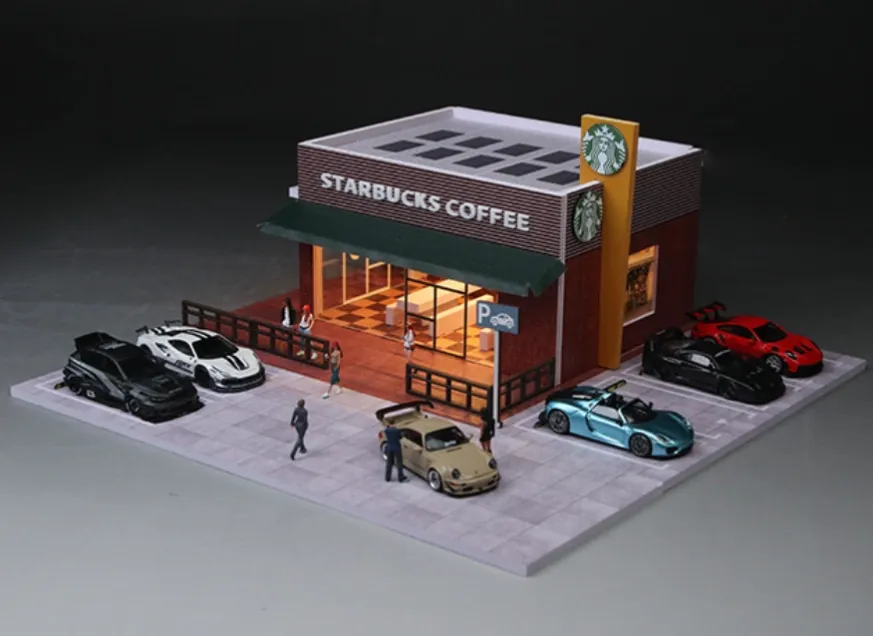
A Good Diecast Collection Needs More Than Cars
For many diecast collectors, buying a model car is only the beginning. They may also want a garage to park it in, a workshop to create a repair scene, or a miniature street to make the display feel more realistic.
For hobby stores and diecast retailers, this creates an opportunity. Instead of offering only individual cars, you can build a more complete product range around the collecting experience.
The challenge is deciding which products belong together. Too many similar items can make a category feel repetitive, while a carefully selected mix gives customers more reasons to explore your store.
Here are some practical ideas for building a balanced 1:64 diorama collection.
1. Start with the Core: Garages and Parking Structures
Garages and parking structures are natural starting points for a diorama category because they give collectors a defined place to display their cars.
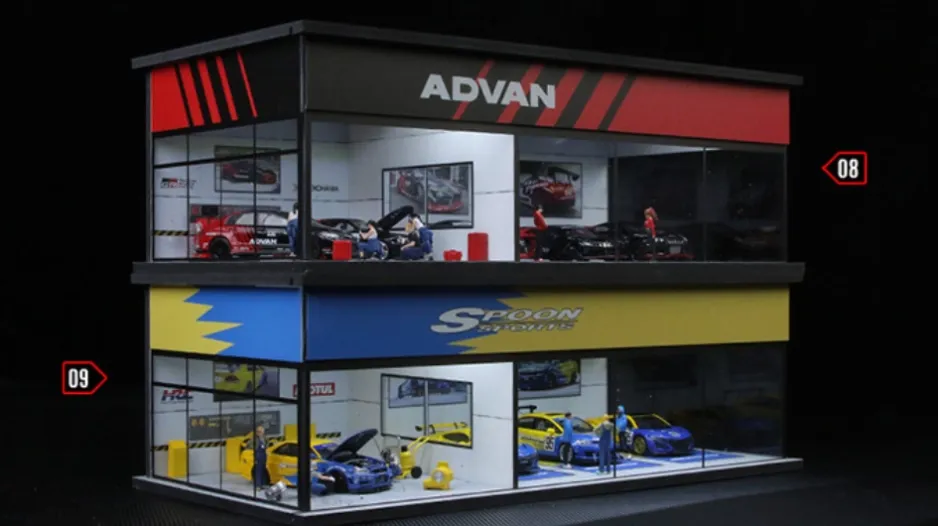
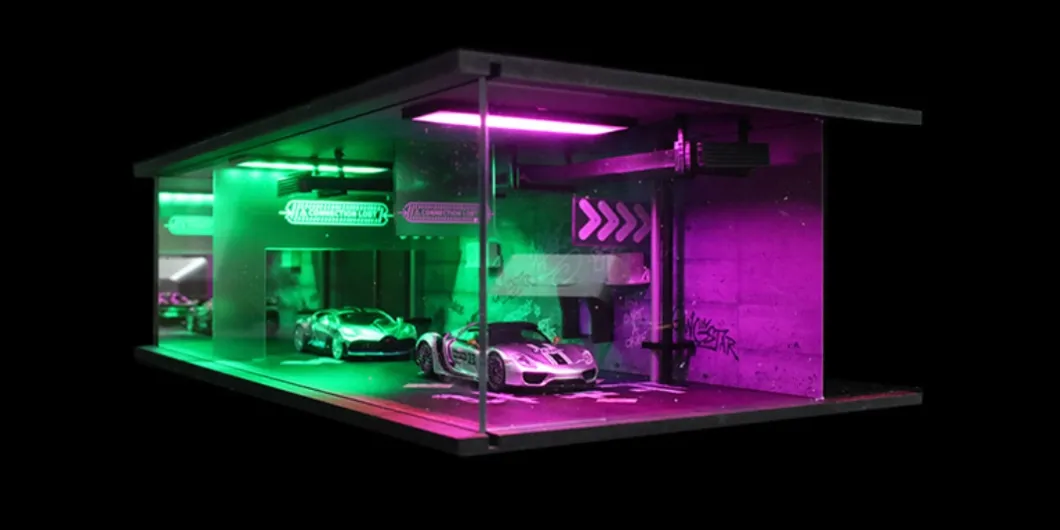
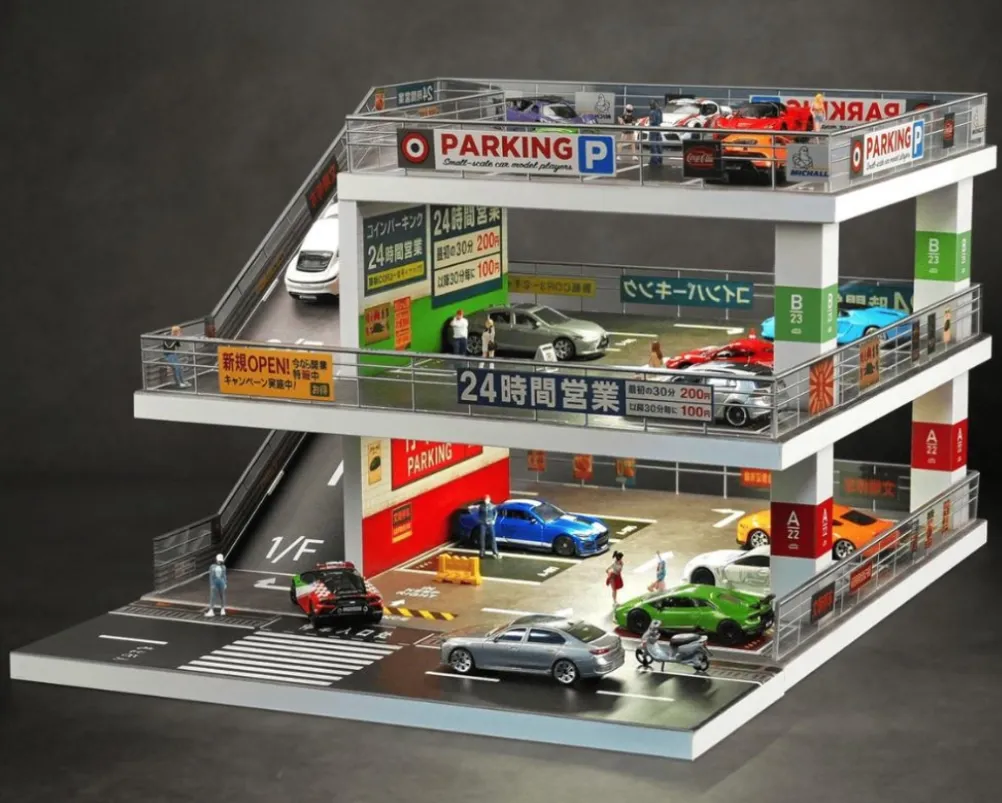
A compact garage may appeal to someone building a small desktop display. A multi-level parking structure can offer more visual variety for collectors with larger collections. Workshop-style garages are another option for customers who enjoy creating repair and maintenance scenes.
Rather than stocking several products that look almost identical, consider offering different scene types and layouts.
For example, your range could include:
- Compact garages for small displays.
- Multi-level parking structures for larger collections.
- Automotive workshops and service stations.
- Open parking scenes for urban layouts.
These products serve different display preferences, giving buyers a clearer reason to choose one design over another.
2. Add Street and Urban Scenes
A garage is only one possible setting for a miniature car. Some collectors prefer the atmosphere of a city street, a roadside shop, or a Japanese-style urban corner.
Street scenes can help retailers reach customers who already own garages but want something different for their next display.
Consider combining automotive settings with urban environments such as small storefronts, roadside locations, or themed street corners. These products can also give customers more flexibility when planning a larger miniature city.
For retailers, the key is variety. A selection of garages, parking structures, and street scenes can serve several display styles without relying on one product type alone.
3. Don't Overlook Workshop Equipment
Small accessories may not occupy as much shelf space as a complete garage, but they can help customers add detail to an existing scene.
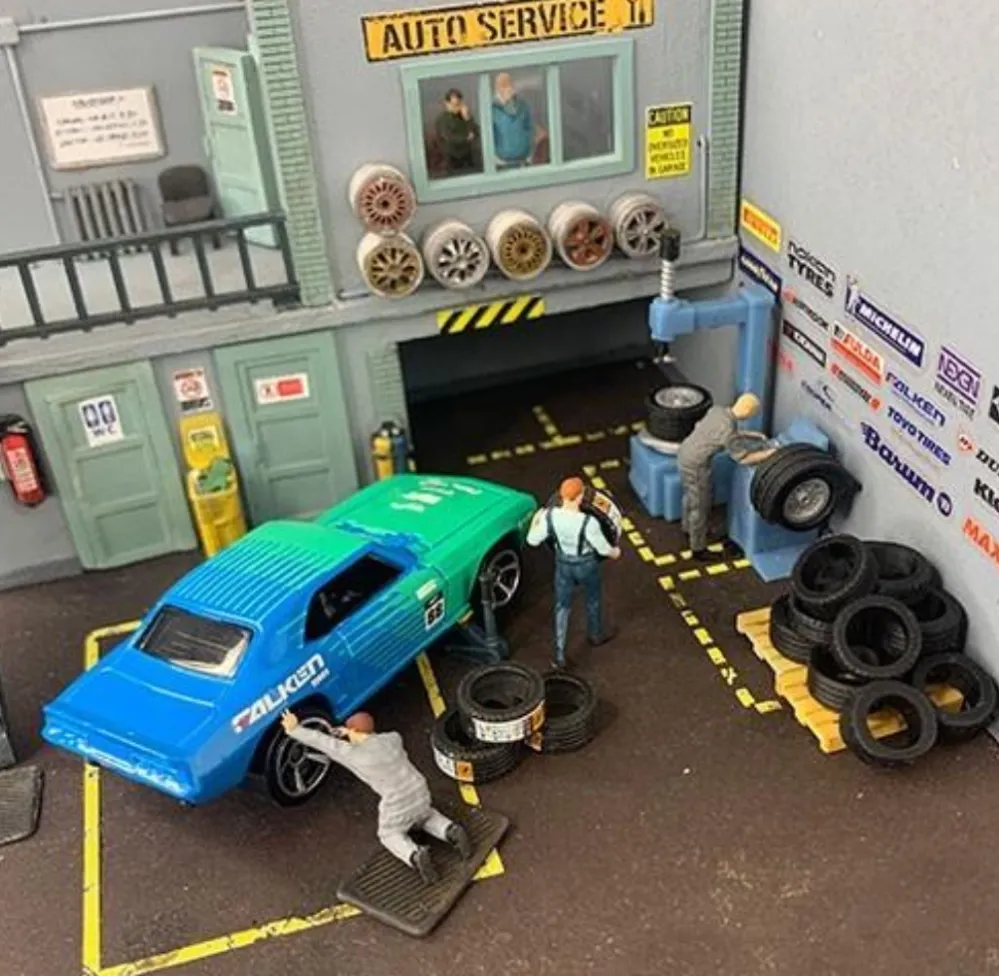
Examples include miniature vehicle lifts, tire racks, workbenches, tool walls, and other workshop equipment.
These products are useful when a collector wants to improve a scene gradually rather than purchase a completely new setup.
They can also complement garages and repair-shop dioramas already in your range. A customer who has bought a workshop may later return for additional equipment to make the scene more detailed.
When choosing accessories, pay attention to scale compatibility, product dimensions, and how each item fits into the overall scene. A useful accessory should make the display more convincing without overcrowding it.
4. Use Figures to Bring Scenes to Life
Miniature figures can add a sense of activity to a static display.
Mechanics can make a workshop look occupied. Racing figures can complement motorsport scenes, while photographers or other themed figures may suit different display concepts.
Not every collector wants figures in every scene, so a focused selection is often more practical than an oversized assortment.
Think about the main themes in your current range and select figures that naturally complement them. This makes it easier for customers to understand how products work together.
5. Create Complementary Product Combinations
Once you have several related product categories, consider how customers might use them together.
For example:
- A garage paired with workshop equipment.
- A parking structure combined with miniature figures.
- A street scene complemented by suitable vehicles and accessories.
- A repair-shop setting with lifts, tire racks, and workbenches.
These combinations can inspire customers and help them discover products they might otherwise overlook.
Retailers can present complementary items together on category pages, in product recommendations, or in physical displays. The goal is not to force customers to buy more, but to show how individual products can contribute to a more complete scene.
Before promoting any combination, verify that the products are compatible in scale, dimensions, and design.
6. Match Your Range to Your Customers
A specialist diecast shop may have customers who already understand different scales and display styles. A general hobby retailer may need clearer product descriptions and more guidance for newcomers.
Look at the questions customers ask, the products they buy together, and the categories that receive the most attention.
If customers frequently ask how to improve their displays, accessories may deserve more space in your range. If multi-car scenes are popular, parking structures could be worth exploring. If shoppers prefer themed setups, garages and street scenes may offer more relevant options.
A balanced product range should reflect actual customer interests rather than simply the number of products available from a supplier.
7. Evaluate New Products Before Expanding Too Far
When adding new diorama products, consider more than the catalogue image.
Check the dimensions, scale, materials, packaging, assembly requirements, and compatibility with the vehicles your customers commonly collect. Ask for clear product photos and specifications before making purchasing decisions.
It is also worth considering whether the product adds something new to your existing range. A different layout or scene theme may offer more value than another item that looks nearly identical to what you already stock.
Where available, mixed-model trial orders can help retailers assess several designs before deciding which ones deserve a larger order.
Expand Your 1:64 Diorama Range
A strong diorama category doesn't need to include every available design. It needs a thoughtful mix of core scenes, complementary accessories, and products that suit the interests of your customers.
Our range includes 1:64 garages, parking structures, street scenes, workshop equipment, and miniature figures, along with selected display scenes in larger scales.
Looking for new products for your diecast store? Contact our team to request the catalogue, check product specifications, and discuss wholesale pricing or a mixed-model trial order.
The right combination of products can help your customers build more interesting displays—and give your store more ways to serve the diecast collecting community.