Oct 15, 2026Industry News
1:64 vs. 1:18 Diecast Display Garages: Which One Is Right for You?
Explore miniature garages and display accessories to find options that suit your preferred scale and display style.
Choosing a display garage is not just about finding a design you like. The scale of your diecast collection also determines how much space you need, which accessories are suitable, and how you can arrange your display.
For collectors deciding between 1:64 and 1:18 setups, the differences go beyond the size of the cars.
Both scales offer interesting display possibilities, but they serve different needs.
Understanding the Difference Between the Two Scales
A 1:64 model represents a vehicle at approximately one sixty-fourth of its real-world size. A 1:18 model is much larger, representing approximately one eighteenth of the original vehicle's dimensions.
For example, a real car measuring around 4.5 meters long would have a scaled length of approximately 7 cm at 1:64 and 25 cm at 1:18.
Actual diecast models vary by vehicle and manufacturer, but this comparison gives you an idea of the difference.
As a result, a garage designed for 1:64 vehicles generally cannot accommodate 1:18 models. Always check the actual dimensions instead of relying on scale labels alone.
Why 1:64 Garages Work Well for Larger Collections
One major advantage of 1:64 is the ability to display many vehicles within a relatively small area.
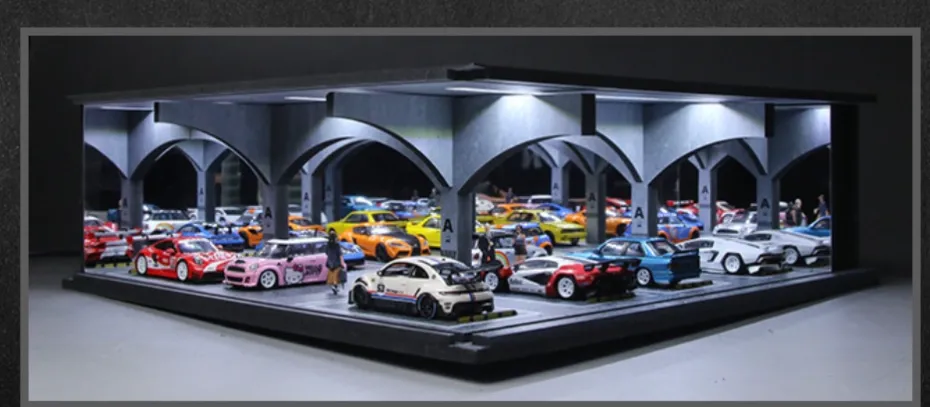
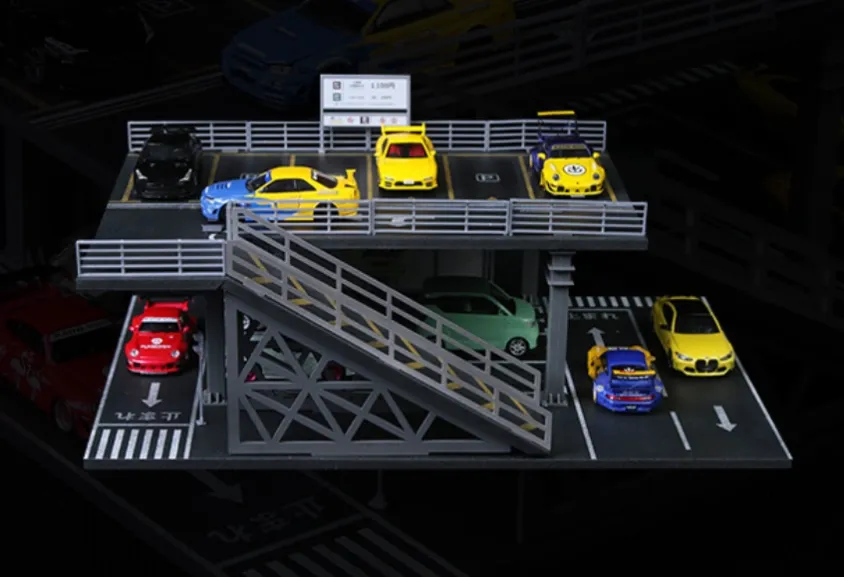
Collectors with a large number of cars can arrange them across several parking levels, create a miniature street scene, or build a workshop with multiple service bays.
This scale also makes it easier to experiment with different layouts.
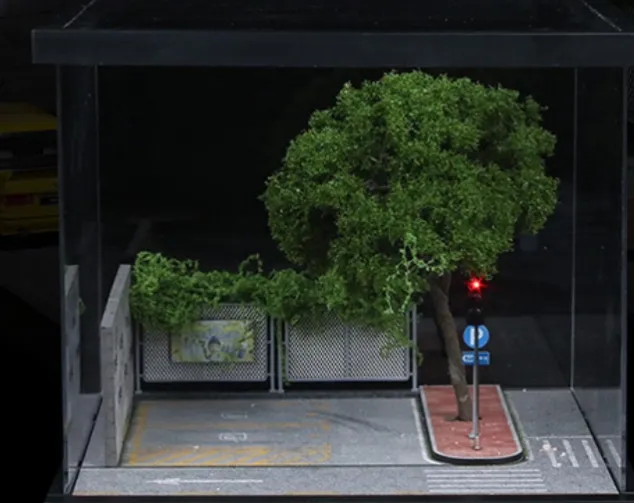
You could create a city parking structure, a gas station scene, a classic-car garage, or a small automotive service center without dedicating an entire room to the display.
For collectors who enjoy collecting a wide range of vehicles, 1:64 offers considerable flexibility.
However, smaller accessories require careful attention to detail. Figures, tools, and parking equipment should look proportionate to the vehicles.
Why 1:18 Displays Need More Space
A 1:18 vehicle is considerably larger, making it easier to appreciate details such as bodywork, interior features, wheels, and paint finishes.
For many collectors, these models are intended to be displayed individually or in smaller groups.
A 1:18 garage can provide a realistic setting for a favorite sports car, classic vehicle, or detailed replica. It may also work well as a photography background.
The trade-off is space.
Even a small number of 1:18 vehicles can require a substantial shelf or display cabinet. Before buying a garage, measure both the available display area and the dimensions of your largest model.
You should also consider the height and width of the garage entrance, especially if your vehicles have large mirrors, wide bodies, or other protruding details.
Choosing the Right Accessories
Accessories can help make a garage feel more realistic, but scale compatibility is essential.
For 1:64 scenes, useful options may include miniature mechanics, tire racks, tool cabinets, lifts, parking barriers, and street furniture.
For 1:18 displays, accessories generally need to be larger and may include workshop equipment, service tools, storage cabinets, and larger display elements.
Do not assume that an accessory will fit simply because the listing mentions a similar scale. Compare its measurements with your vehicle and the available space.
A well-proportioned setup usually looks more convincing than one filled with accessories that are too large or too small.
Consider Your Display Goals
Before choosing a scale, ask yourself what you want to achieve.
If your goal is to display dozens of vehicles in a compact area, 1:64 may be the more practical option.
If you prefer highlighting a few detailed models and creating a larger individual display for each one, 1:18 may be more suitable.
Some collectors enjoy both scales for different reasons. They might use 1:64 for a miniature city or parking scene while reserving 1:18 for special models.
There is no need to choose one scale exclusively if your space and budget allow you to enjoy both.
Check Dimensions Before You Order
Regardless of scale, a few measurements can save you trouble later.
Check the garage's overall dimensions, individual parking spaces, entrance clearance, and height between levels. For larger models, also consider how easily you can place and remove a car without touching nearby vehicles or accessories.
If you are purchasing online, request additional measurements when the product information is incomplete.
This is especially useful when buying a garage intended for a specific model or an existing collection.
Which Scale Should You Choose?
The right scale depends on your collection, display space, and personal preferences.
A 1:64 garage is a strong option for collectors who enjoy building larger scenes and displaying many vehicles. A 1:18 setup may be better for those who want to showcase individual models with more room around them.
Think about how you collect, how you display your cars, and how much space you can realistically dedicate to the hobby.
With the right setup, either scale can become an attractive part of your collection.
Explore miniature garages and display accessories to find options that suit your preferred scale and display style.