Oct 15, 2026Industry News
How Diecast Shops Can Make Miniature Garages More Appealing to Collectors
Explore miniature parking garages, workshop accessories, and diorama products in different styles and scales.
For a diecast shop, selling cars is only one way to serve collectors.
Many customers also want something that makes their models easier to display, more enjoyable to photograph, or more interesting to collect. Miniature garages, parking structures, workshop accessories, and diorama products can help meet these needs.
But adding a new product category is not simply a matter of putting more items on a shelf.
Retailers need to understand what collectors value, present products clearly, and make it easy for customers to imagine how an item will fit into their own collections.
Here are several practical ways to make miniature garage products more appealing.
Show Customers What They Can Create
A product photo against a plain background can communicate the basic design, but it may not show the full potential of a miniature garage.
Collectors often want to know how the product will look with their own cars.
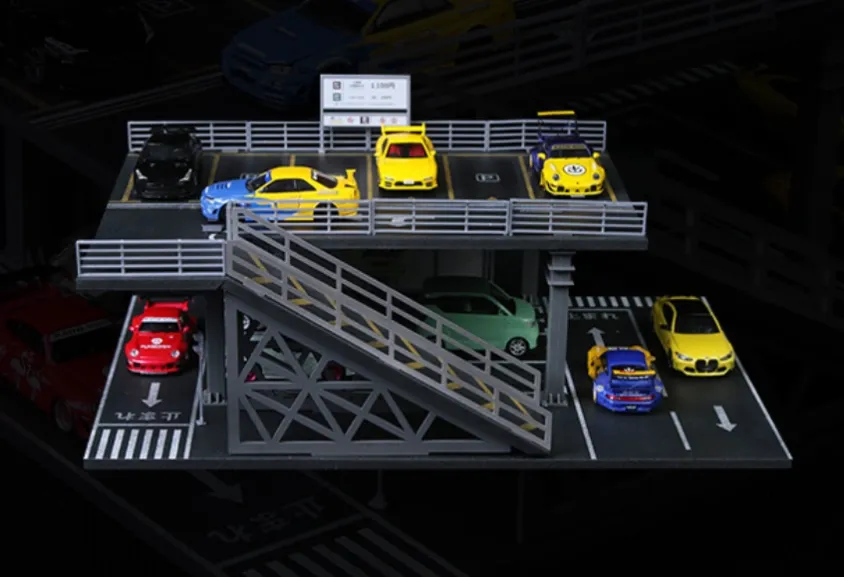
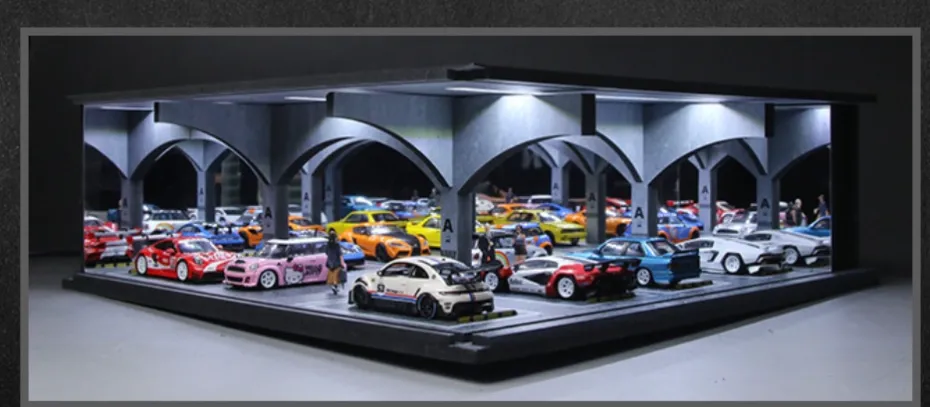
Where possible, use photos that show the garage with compatible diecast vehicles, along with close-up images of the parking spaces, ramps, entrances, and accessories.
Different angles can help customers understand the structure and its overall size.
Lifestyle-style display photos can also be useful, provided they accurately represent the product. If the vehicles or accessories shown are not included, make that clear in the listing.
The objective is to help customers visualize the finished display without creating unrealistic expectations.
Offer Different Types of Display Solutions
Not every collector wants the same thing.
Some customers may be looking for a simple garage for a few favorite cars. Others may want a multi-level parking structure that can accommodate a growing collection.
There are also collectors interested in detailed workshop scenes, complete with miniature mechanics, vehicle lifts, tool cabinets, and tire racks.
A retailer can organize these products by intended use rather than listing everything in one large category.
For example, a store could group products into:
- Compact garages for small collections.
- Multi-level parking structures.
- Workshop and repair accessories.
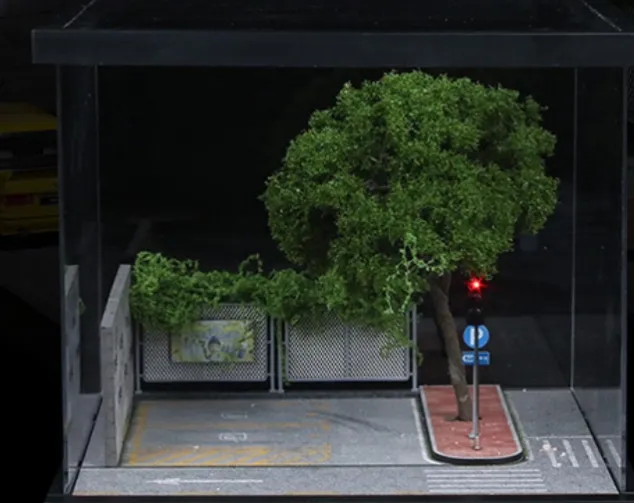
- Street and urban diorama elements.
- Display products with dust covers.
This makes it easier for customers to find relevant products and compare alternatives.
Make Scale and Dimensions Easy to Understand
One of the most common questions buyers have is whether a garage will fit their cars.
A product labeled 1:64 may be suitable for many models, but vehicle dimensions can vary. Some cars are wider or longer than others.
Retailers should provide the actual dimensions of the garage and its parking spaces whenever possible.
It is also helpful to include photos showing a compatible vehicle inside the garage. Such images give customers a better sense of proportions than an isolated product photo.
If compatibility has only been checked with certain models, avoid claiming that every vehicle in the same scale will fit.
Accurate information helps customers make better decisions and reduces the risk of disappointment after delivery.
Use Accessories to Create Relevant Product Combinations
Accessories can give collectors more ways to personalize their displays.
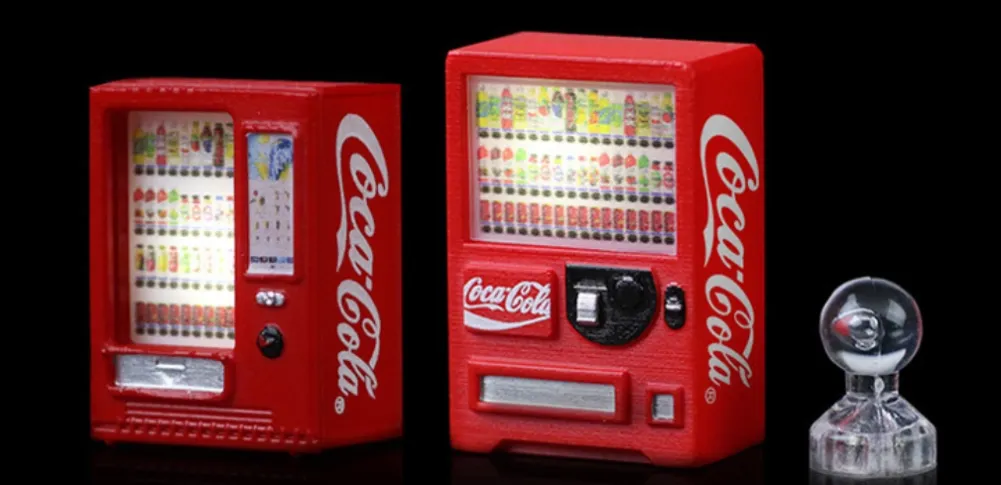
For example, a multi-level garage might be paired with parking signs or barriers. A workshop could be presented alongside a lift, tool storage, or tire racks.
These combinations help customers understand how individual products work together.
For retailers, relevant product recommendations may also encourage customers to explore more of the range.
However, the combinations should be practical. Customers should be able to understand why the products belong together and whether the accessories are compatible with the main item.
Clear product bundles, when available, can make the purchasing process easier.
Pay Attention to Product Quality and Packaging
Visual appeal attracts attention, but product quality influences whether customers feel satisfied with their purchase.
Before introducing a new garage or accessory, review its construction, finish, dimensions, and packaging.
For multi-level structures, check how the parts connect and whether the design is stable when assembled according to the instructions.
For products with transparent covers, look at the fit and visibility. For small figures and accessories, examine the details and how easily the pieces could be damaged during transport.
Packaging also matters, especially for products with larger or delicate components.
Where possible, evaluate samples before adding unfamiliar products to your regular range. This allows you to assess the item directly instead of relying entirely on supplier photos.
Make Product Information Useful, Not Complicated
A good product listing should answer the questions customers are likely to ask before purchasing.
Include the scale, dimensions, materials, included components, assembly requirements, and packaging information where available.
Use clear photos to show the product from several angles. If the item requires assembly, explain what the customer should expect.
Avoid filling the description with generic claims such as “premium quality” or “perfect design” without supporting details.
Specific information is more helpful. Explaining the number of parking levels, the presence of a removable cover, or the dimensions of a parking space gives customers something concrete to evaluate.
Test New Designs and Listen to Customer Feedback
You do not need to expand your entire product range at once.
Start with a selection that reflects your customers' interests. Track which products receive the most attention, what questions shoppers ask, and which items generate repeat purchases.
Customer feedback can reveal opportunities you might otherwise overlook.
For example, repeated questions about dust protection may indicate interest in covered garages. Requests for more parking capacity could suggest demand for multi-level designs. Questions about mechanics or workshop equipment may point toward a need for compatible accessories.
Use these observations to guide future product selection.
Turn a Product into a Better Collecting Experience
Miniature garages are not just storage products. For many collectors, they are part of the enjoyment of owning diecast vehicles.
By presenting products clearly, offering relevant accessories, and helping customers understand compatibility, retailers can make the buying experience more useful and engaging.
The goal is not simply to add more products to a catalog. It is to offer display solutions that fit the way collectors enjoy their hobby.
Looking to expand your diecast product range?
Explore miniature parking garages, workshop accessories, and diorama products in different styles and scales. A carefully selected range can help you serve more collector interests while giving customers new ways to display their favorite vehicles.