Oct 28, 2026Industry News
How to Build a Realistic 1:64 Roadside Service Scene for Diecast Cars
Learn how to create a realistic 1:64 roadside service scene with diecast cars, miniature service stations, repair equipment, road details, and accessories.
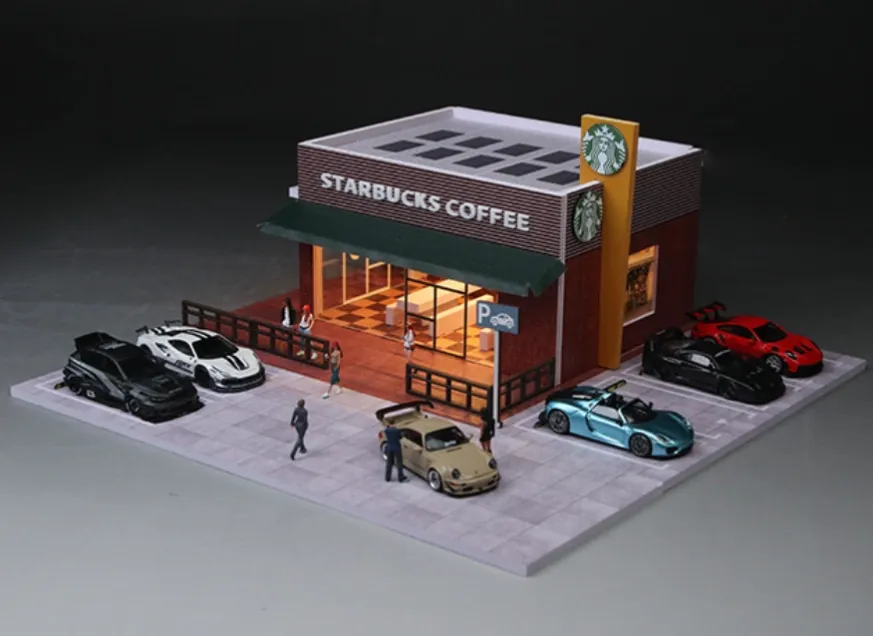
Why Build a Roadside Service Scene?
A collection of diecast cars can look impressive on its own, but a well-designed scene gives each vehicle a place and a story. A roadside service scene is a great option for collectors who want something different from a standard garage or parking lot.
Think of a car stopping for fuel, a mechanic checking a vehicle, or a sports car waiting outside a tire shop. These everyday situations are easy to recognize, and they create plenty of opportunities to arrange different vehicles and accessories.
For 1:64 diecast collectors, the best part is that a convincing roadside scene does not need to be large or complicated. A small service station, a section of road, and a few carefully selected details can be enough to create a display with character.
1. Choose a Setting That Matches Your Cars
Start by deciding what kind of roadside environment you want to recreate.
A traditional gas station works well with classic cars, muscle cars, and everyday vehicles. A tire shop or repair center is a natural match for performance cars and modified street cars. If you collect trucks or commercial vehicles, a roadside maintenance area may be a better choice.
The vehicle collection should guide the setting rather than the other way around. This helps the finished scene feel connected instead of looking like a random group of miniature objects.
Before choosing a diorama, consider the number of cars you want to display and how much room the scene will need.
2. Pay Attention to Scale and Proportion
Scale compatibility is one of the first things to check when buying a miniature roadside scene.
A product labeled 1:64 may be intended for small diecast vehicles, but individual models can still vary in length, width, and height. Trucks, wide-body sports cars, and modified vehicles may need more space than standard passenger cars.
Check the dimensions of the parking spaces, service bays, entrances, and road sections before placing an order. If the product information does not show the available clearance, ask the supplier for measurements.
It is also worth checking whether the scene comes fully assembled or requires setup. This can affect how you plan the display and how much space you need during installation.
3. Add Accessories That Make the Scene Believable
Accessories help explain what is happening in a miniature environment. However, adding more pieces does not automatically make a scene better.
For a roadside service station, consider details such as:
- Fuel pumps and service signs
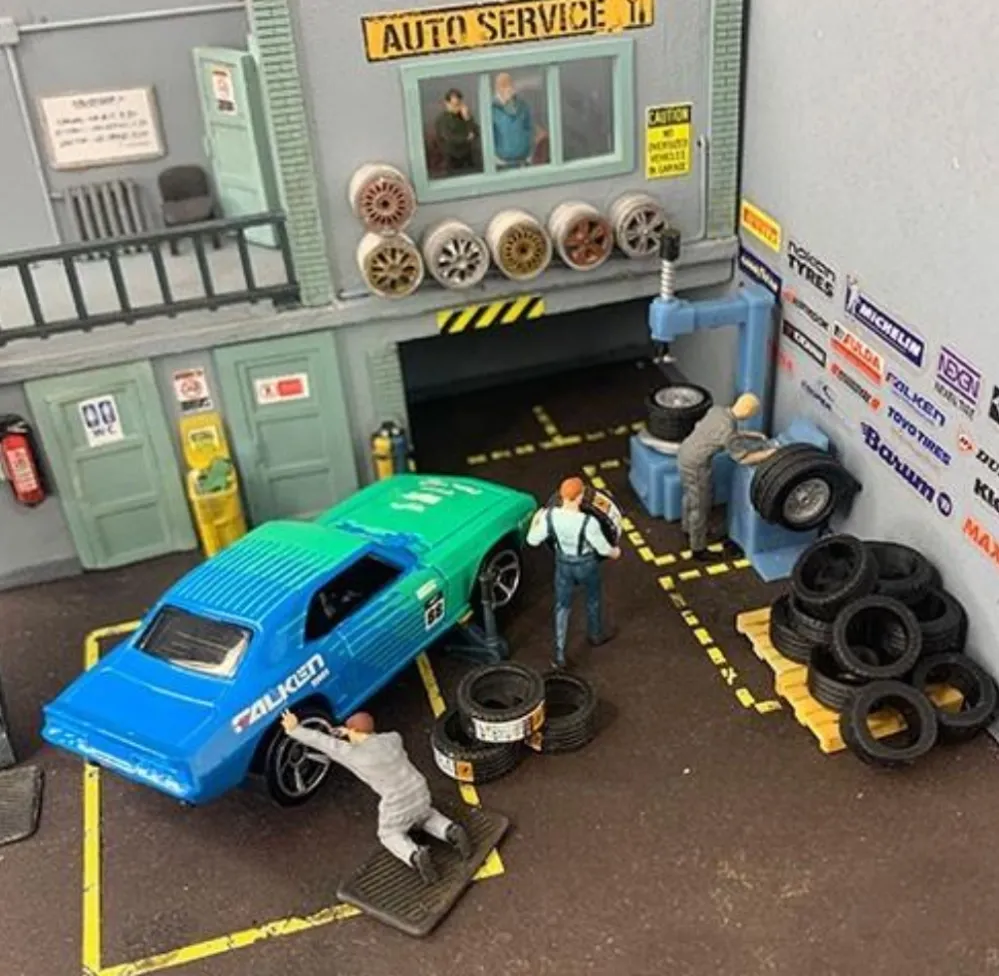
- Tire racks and stacks of tires
- Tool cabinets and workbenches
- Floor jacks and repair equipment
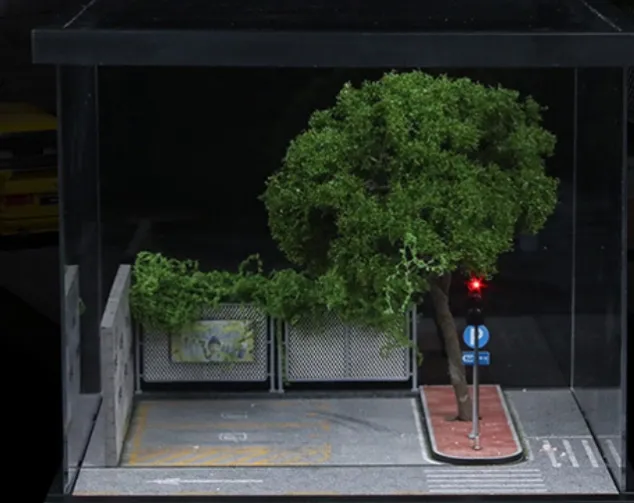
- Traffic cones and road barriers
- Mechanics and other miniature figures
Choose accessories according to the scene's purpose. A tire shop should look different from a fuel station, even if both contain cars and repair equipment.
Leave enough open space for the main vehicles. Accessories should support the display, not hide the cars behind piles of miniature equipment.
4. Use Lighting to Create the Right Atmosphere
Lighting can change how a roadside scene looks, especially when the display is placed on a desk, shelf, or dedicated hobby table.
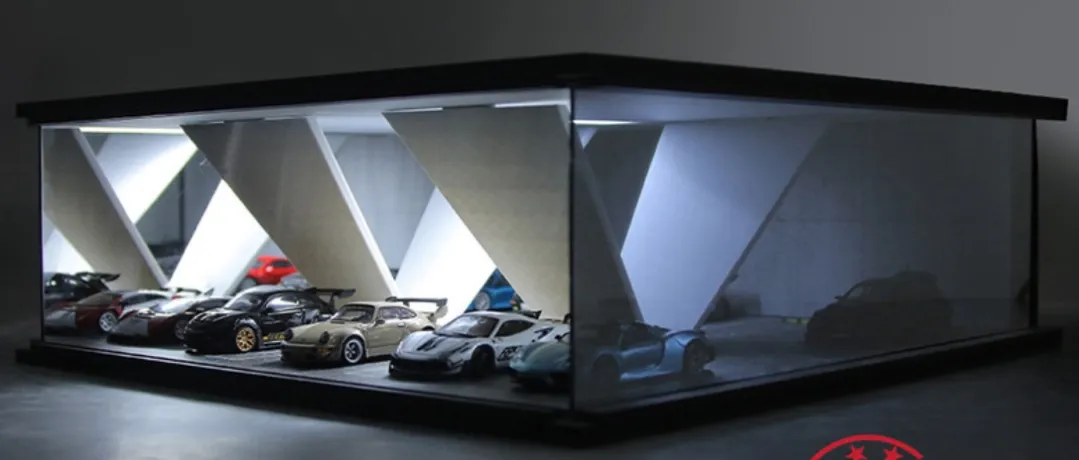
Bright, neutral lighting works well for showing paint colors and small details. Warmer lighting can create the feeling of a roadside stop in the evening. If your diorama includes built-in LED lighting, consider how the light falls on the vehicles and whether it creates unwanted reflections.
You do not need to illuminate every corner. A focused light source can help draw attention to a service bay, a featured vehicle, or a storefront sign.
5. Keep the Layout Easy to Expand
Some collectors prefer a single compact scene, while others gradually build an entire miniature town.
If you plan to expand, think about how the roadside station might connect visually with other scenes. A road section, parking area, or workshop can become part of a larger layout later.
Even if the products are not physically connectable, similar road colors, pavement styles, and building designs can help separate scenes feel like parts of the same environment.
Final Thoughts
A realistic 1:64 roadside diorama is about more than putting a car beside a building. The right setting, suitable proportions, and a few well-chosen accessories can turn a simple display into a miniature automotive story.
If you are exploring new display ideas, take a look at the miniature garages, parking scenes, and street dioramas available from Sundor Tech. Choosing a scene that fits your collection is a good place to start.