Oct 22, 2026Industry News
How Diecast Retailers Can Build a Better Assortment of 1:64 Diorama Products
A well-planned product range gives customers different ways to enjoy their collections while helping retailers manage shelf space and inventory.
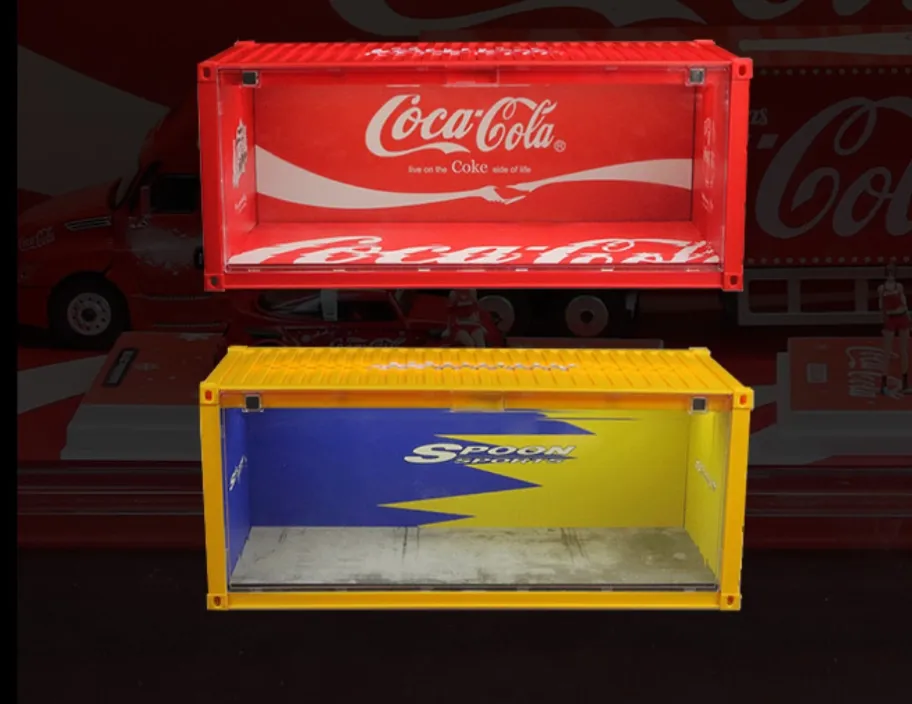
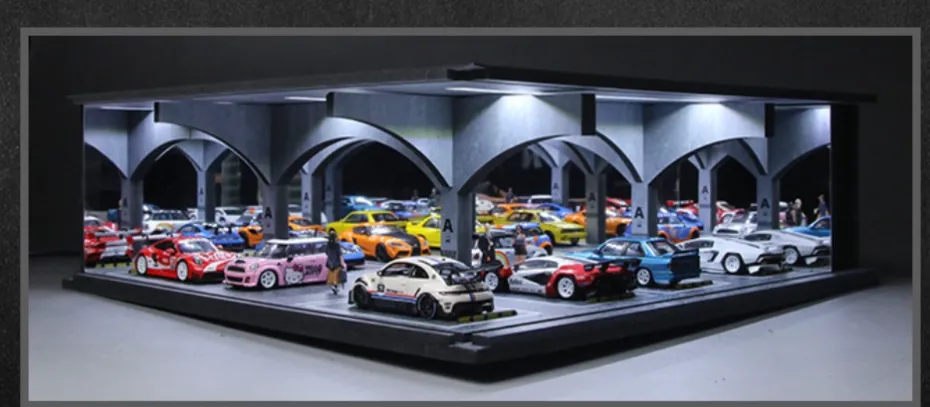
For diecast retailers, building a strong 1:64 diorama assortment is not simply about stocking as many products as possible. Customers have different needs: some want a simple place to display their cars, while others want to build detailed garages, workshops, streets, and dealership scenes.
A well-planned product range gives customers different ways to enjoy their collections while helping retailers manage shelf space and inventory.
This guide explains how retailers can organize their 1:64 diorama assortment and what to consider when sourcing products wholesale.
1. Start with the Main Product Categories
A useful assortment usually begins with a few clear categories.
Miniature garages: These provide a dedicated display space for diecast cars and can appeal to collectors who want a recognizable automotive setting.
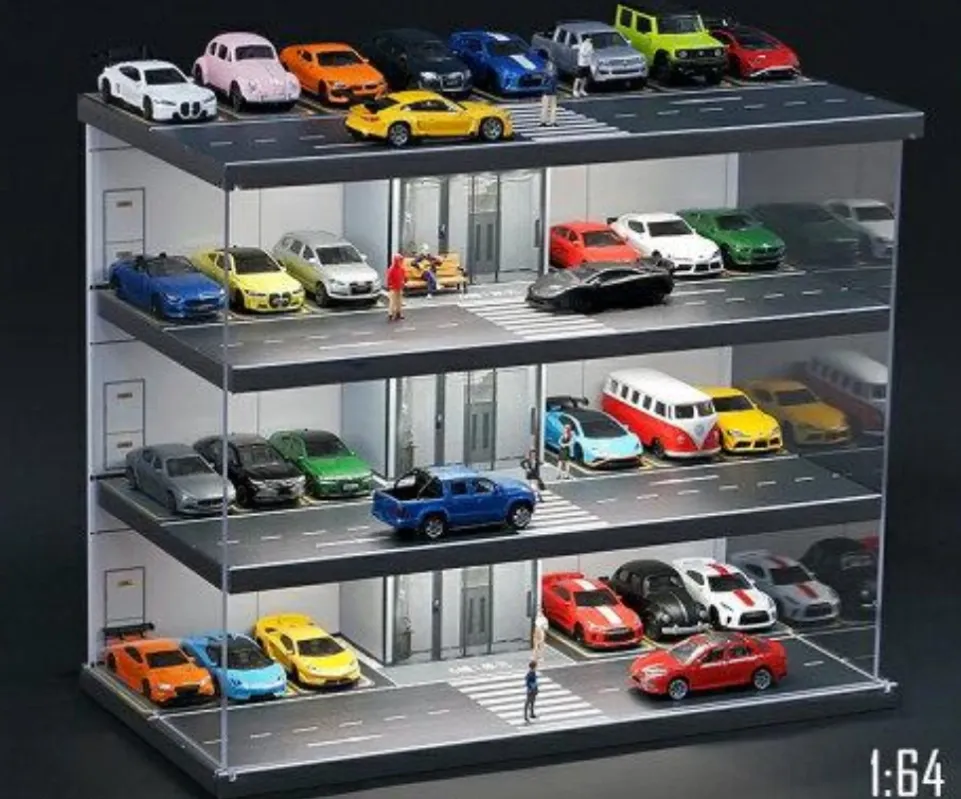
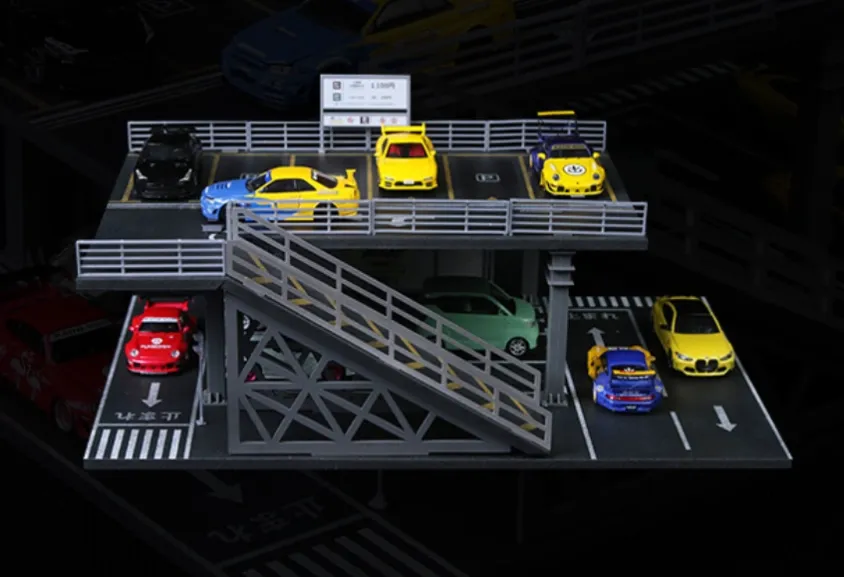
Parking structures: Multi-car and multi-level designs help collectors display more vehicles within a limited area.
Street scenes and urban dioramas: These create a different atmosphere from garages, allowing collectors to build city streets, parking areas, or other automotive environments.
Workshop accessories: Vehicle lifts, tire racks, jacks, workbenches, and tool cabinets add detail to repair scenes.
Figures and small accessories: Mechanics, customers, and other miniature figures bring scenes to life and can complement buildings and equipment.
Retailers do not need to stock every category immediately. The aim is to create a selection that makes sense for the customers they already serve.
2. Offer Products at Different Levels of Detail
Not every customer wants to build a complicated scene.
Some collectors prefer a simple garage that can be set up quickly. Others enjoy arranging multiple vehicles, adding tools, and building a more detailed workshop.
A retailer can accommodate both groups by selecting products with different levels of complexity.
For example:
- A basic display garage for customers who want a straightforward setup.
- A larger parking structure for collectors with more vehicles.
- A workshop scene for customers interested in automotive details.
- Individual accessories for buyers who want to customize an existing display.
This structure gives customers a reason to explore more than one product category without making the range feel repetitive.
3. Look for Complementary Products, Not Just Similar Ones
Stocking several products that perform almost the same function can make purchasing decisions difficult.
Instead, consider how each product adds something new to the assortment.
A multi-car garage might complement a set of workshop accessories. A street scene may appeal to customers who already have a garage but want a different display environment. Miniature figures can add value to both.
Before adding a new SKU, ask:
- Does it serve a different customer need?
- Does it offer a different visual style or layout?
- Can it be used with products already in the range?
- Is there a clear reason for customers to buy it?
These questions can help retailers build a more balanced assortment instead of simply increasing the number of SKUs.
4. Evaluate Product Information Before Ordering
Product photos alone are not enough to make a wholesale purchasing decision.
Retailers should request or confirm the information needed to assess whether a product fits their store.
Information | Why it matters |
|---|---|
Scale and dimensions | Helps customers understand the actual size |
Display capacity | Shows how many cars may fit, where specified |
Materials and construction | Helps explain the product's features |
Included accessories | Prevents confusion about what comes in the box |
Packaging | Important for storage, shipping, and retail presentation |
MOQ and wholesale price | Helps calculate the initial investment |
Lead time | Supports inventory and launch planning |
Shipping terms | Helps estimate the landed cost |
For products with covers, moving parts, lights, or assembly requirements, retailers should also confirm the relevant specifications instead of relying on photographs.
5. Manage Inventory Risk with a Clear Sourcing Plan
Diorama products can take up more storage space than small diecast cars, so inventory planning deserves attention.
Before placing a large order, compare the dimensions of the packaging, MOQ, expected selling price, and available storage space.
Where the supplier permits it, a mixed-model order can help retailers test several designs without committing to a large quantity of a single SKU. However, mixed orders and sample quantities depend on the supplier's actual terms and should be confirmed in advance.
It is also helpful to separate products into three groups:
- Core products: Items that fit the store's main customer base.
- Complementary products: Accessories that expand the usefulness of existing displays.
- Test products: New styles that may appeal to a narrower group of customers.
This approach can make it easier to review sales and decide which products deserve repeat orders.
6. Present the Assortment Clearly Online
A good product assortment needs clear presentation.
Organize the online store by product type, scale, and intended use where practical. Use product photographs that show both the full scene and important details.
Product descriptions should answer basic questions before customers need to contact support: What is the scale? What are the dimensions? Are the cars included? What accessories are supplied? Does the product require assembly?
For wholesale buyers, a downloadable catalogue with item codes, product specifications, MOQ, and pricing information can also simplify product selection.
7. Choose a Supplier That Supports Your Business Needs
When sourcing 1:64 diorama products wholesale, price is only one part of the decision.
Retailers should also consider product variety, consistency of specifications, packaging, communication, lead times, and the supplier's ability to provide information when questions arise.
A supplier who can help identify suitable products and clarify order requirements may make it easier to develop a coherent assortment over time.
Start by selecting products that match your customers' interests, then review actual sales and feedback before expanding the range further.
Conclusion
Building a better 1:64 diorama assortment starts with understanding your customers and choosing products that complement one another. Garages, parking structures, street scenes, workshop accessories, and figures each offer different ways to expand a diecast collection.
For retailers, a balanced assortment, clear product information, and careful wholesale planning can help reduce unnecessary inventory risk while giving collectors more display options.
Looking for a wholesale supplier of miniature garages, 1:64 dioramas, and workshop accessories? Explore Sundortech's product range or contact us for the catalogue, product details, MOQ, and wholesale pricing.